“Listening is like running down a mountain on a switchback trail, the sound of surprise generating its own momentum. There’s a punk glee inside the bluegrass craft– and a punk vehemence inside the bluegrass smile.”*…
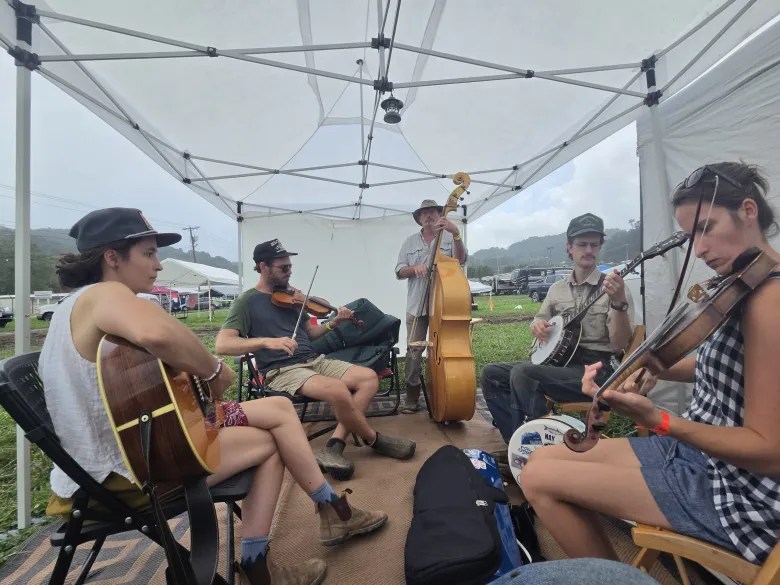
On the heels of Hardy Strictly Bluegrass [and here], Warren Hellman‘s gift to San Francisco, the most recent annual installment of which was last weekend, a lovely piece by David Alm on a more traditional event…
I got off Interstate 81 to give my soul a break. The back roads of southwest Virginia wind, crest, and plunge through lush valleys of oak, poplar, birch, and maple trees. It’s easy to lose track of time and distance there. People drive slower. Cows graze in pastures. And there are no placards festooned with Motel 6 and Starbucks logos, flattening the American landscape into a homogeneous blur. Any signs you might see are low to the ground and handmade, protesting a data center, for instance, or thanking Jesus.
I’d gone to this rural pocket of the country for the 90th annual Old Fiddler’s Convention in Galax, an independent city of just under 7,000 near the North Carolina border whose population, for six days in early August, balloons to around four times that. They arrive in RVs and Casitas, camper vans and cars to stake out 20-by-35-foot plots in Felts Park, a 28-acre fairground in the heart of Galax, transforming it into a massive, muddy parking lot sprinkled with portable toilets and a cluster of food trucks, offering loaded potatoes, funnel cake, and blooming onions.
The Old Fiddler’s Convention—or just Galax, as the diehards call it—is the oldest and largest fiddlers’ convention in the world, a place where banjo pickers, guitar players, and other maestros of old-time strings gather to see how they stack up. Founded in 1935, Galax has been canceled only twice since then: once during World War II, due to travel restrictions, and again in 2020, due to the COVID-19 pandemic. Many Galaxers have been going every year for decades, some for as long as they’ve been alive.
There are scads of rules: If you play clawhammer-style banjo in the bluegrass band competition, you will get disqualified. Same if you play bluegrass-style banjo in the old-time competition. If you break a string while performing, you must stop immediately. Playing time during competition is limited to two minutes and 30 seconds. And, crucially, no electric instruments of any kind are allowed, either on stage or in the tightly packed fairgrounds, where self-described hillbillies, accountants, firefighters, and session musicians pick day and night in blistering, impromptu jams amid the RVs.
One does not merely attend Galax. It’s not a music festival. There are no headliners, and no full-set performances. There is a single stage, and over the course of six days, contestants take it one after another to play one song for a panel of judges and a smattering of spectators. There are more than a dozen categories, little changed in the past century: old-time fiddle, guitar, dulcimer, folk song. Cash prizes for individual players range from $35 to $285; a campsite and contestant pass together cost $175. “The prestige of being judged a ‘winner at Galax,’ and the respect for one’s musical talent that goes along with it, far outweighs any monetary award,” wrote Fred Burton in the March 1984 issue of Bluegrass Unlimited…
…
… An old-time jam goes something like this: Anywhere from two to umpteen musicians gather in a circle, knee-to-knee, and someone—usually the fiddler—calls a tune. Before you know it, you’re carried away by a cyclone of fiddles, mandolins, banjos, and guitars, all locked into a swirling rhythm that can, when it’s good, take you to church.
The tradition dates to the mid-1700s, when Scots-Irish immigrants first settled in Appalachia. Even then, coastal property was for the elite, forcing poorer immigrants inland and south, through the Shenandoah Valley to southwest Virginia, where land was plentiful and cheap. Their music quickly took root. “The Scots brought fiddles and liquor,” Ted McAllister, one of my neighbors in Felts Park, told me. “The Germans brought church music and beer.”
Over time, Scottish fiddle tunes evolved, as oral traditions do, and began to mix with the musical traditions of enslaved Africans, who had brought with them gourd instruments that would evolve into the American banjo, along with rhythms the Scots had never heard before. Old-time music, in other words, is the music of diasporas, fed into a blender and then worked into a froth. A lot of traditional folk songs came out of this period, too. One that I learned at Galax, “Going to the West,” tells the story of a young man who leaves the mountains of his birth, “where labor is in vain,” to seek the fertile plains out west. It’s the story of my own Scottish forebears, who settled in South Dakota before moving to what is now suburban Chicago, and later, Florida.
Bluegrass, by contrast, was born in the 1940s, when Bill Monroe and The Blue Grass Boys took those mountain sounds, combined them with Southern church music and blues, and tightened it all into something you might call an uncle of rock ’n’ roll. There’s a reason that Billy Strings plays to sold-out arenas and pickers from around the world can play classics like “Blue Ridge Cabin Home” at the drop of a one-chord.
Where bluegrass is punchy and clean, designed for the stage, old-time is ecstatic, designed for participation. Bluegrass jams attract spectators who marvel at the players’ pyrotechnics; old-time jams get people on their feet. At Galax, some folks drag big pieces of plywood around the fairgrounds looking for old-time jams, where they’ll lay the board down at the edge of the circle and dance. Flatfooters they’re called: the percussion section…
Eminently worth reading in full.
In a southwest Virginia fairground, thousands of musicians gather every August to keep a centuries-old tradition from flickering out: “A Place Among the Fiddlers,” from @longreads.com.
###
As we pick, we might recall that it was on this date in 1939 that George D. “Judge” Hay, the creator and producer of The Grand Ole Opry, invited Bill Monroe and the Blue Grass Boys to audition for a spot on the prestigious radio broadcast. The audition was a success, and Monroe chose “Muleskinner Blues” for their debut. According to observers, when the curtain went up, the audience and Opry regulars alike (including stars such as Roy Acuff, Uncle Dave Macon, and Pee Wee King) were awed by the furious tempo of the Blue Grass Boys. Band member Cleo Davis later observed that the audience “couldn’t think as fast as we played.”
Monroe quickly scored a recording contract, and switched personnel to establish the line-up that became famous, surrounding himself (on mandolin) with Lester Flatt (guitar), Earl Scruggs (banjo), Chubby Wise (fiddle), and Cedric Rainwater (bass). Together, they polished the traditional mountain music celebrated at Galax into a genre that took its name from their group. and Monroe is remembered as “the Father of Bluegrass.”

“But what kind of freedom does one have if one can use it only as someone else prescribes?”*…

As Ravi Somaiya suggests, Ted Kaczynski— the Unabomber– and his manifesto, Industrial Society and Its Future, were uncomfortably prescient about modern politics…
I was going through some old papers last week, when I came across two handwritten letters I received from Ted Kaczynski, better known as the Unabomber, in 2017 and 2018.
My address was filled out in Kaczynski’s own stark, strangely spaced block capitals, precise and somehow odd. The return address was Florence Supermax prison in Colorado, a highly controlled and secured facility which houses a 9/11 conspirator, the cartel boss Joaquin “El Chapo” Guzman, and the leaders of the Latin Kings and the Aryan Brotherhood, among other notorious, or notoriously dangerous, criminals.
Kaczynski was a gifted mathematician — he went to Harvard at 16 — and a loner, who abandoned his career to live in isolation and pursue a bombing campaign against the rise of technology, and the fall of the natural world, from 1978 until 1995. He was caught in 1996, and was serving several life sentences when he died in custody in 2023.
I wrote to him because I was fascinated by his combination of breathtaking prescience — his 35,000-word manifesto, published in 1995, is absolutely correct and reads like a description of modern life — and a cruelty and contempt for his fellow man that led him to squander that gift and kill three people and wound dozens of others in the service of fomenting a moronic fantasy revolution.
It’s a combination that defines modern politics — a solid basic intuition, matched with an idiot desire to hurt anyone who disagrees. And it gets at something in modern culture, which often asks whether we can enjoy the work of someone whose other actions we find morally lacking. I guess I thought if I understood Kaczynski better, I’d understand all that better too.
It was the wrong question, and thus an endeavor doomed to failure. But when I opened one of the letters I found that it had led me to ask him what he thought about Donald Trump. His answer was brilliant and also made me uncomfortable in a way that I still can’t quite describe.
He started by apologizing for the delay in replying. (Even if you find killing people acceptable, you still get a twinge if you keep someone waiting for a message.)
“There’s a lot to be said in regard to DT and the social and political phenomenon that he represents, but I don’t have the time to say it all here,” he wrote. “So I’ll just call your attention to the paragraph that appears on pages 52-53 of my book.”
This, in my limited experience, was very Kaczynski. He loved to be awkward, and elliptical. He also pointed out that the paragraph was written long before the notion of Trump as a political figure became a realistic one.
I got a copy of his book, and have to admit to a frisson as I opened it. I confirmed that he’d written the section in 2010. Then I found the pages he’d cited. It was one short paragraph. To understand it, you have to understand the underlying theory he has, which is detailed on pages 28 and 29:
“Biological organisms, evolving through natural selection, eventually invade every niche in which biological survival is possible at all, and, whatever measures may be taken to suppress them, some organisms will find ways of surviving nonetheless. Within any complex, large-scale society, a similar process will produce self-propagating systems that will invade every corner and circumvent all attempts to suppress them. These systems will compete for power without regard to the objectives of any government (or other entity) that may try to steer the society. Our argument—admittedly impossible at present to prove conclusively—is that these self-propagating systems will constitute uncontrollable forces that will render futile in the long run all efforts to steer the society rationally.”
The precise paragraph he cited goes on:
“Two competing, entirely legal self-prop systems that have arisen in the U.S. during the last few decades are the politically correct left and the dogmatic right (not to be confused with the liberals and conservatives of earlier times in America). This book is not the place to speculate about the outcome of the struggle between these two forces; suffice it to say that in the long run their bitter conflict may do more to prevent the establishment of a lastingly peaceful world order than all the bombs of Al Qaeda and all the murders of the Mexican drug gangs.”
He’s … right. Or, rather, I agree with him. I covered the rise of the Tea Party on the right, and Occupy on the left, at around the time he wrote it. And they have since risen from niche movements to define the entirety of our politics.
Each needs the other to secure its support and push it to greater extremes of ideology and violence. And the love-hate conflict between them is so destructive and widespread that it leaves little room for anything else.
And now I’m making the political argument of a conspiracist murderer. I spent a few days troubled over this, and then remembered that theory rarely survives contact with reality, no matter how brilliant the theorist.
Kaczynski was making the same mistake as the political groups he describes — he failed to understand that people fundamentally want to be happy, and get along with other people, and that they will find unexpected and unpredictable ways to get to that spot. He also failed to understand that nothing is permanent, and that nature works in cycles.
Intellectual humility was not his strong suit. In that, he was a man of our era, more than of his own…
“The Unabomber on Donald Trump,” from Bungalow Magazine.
Further to Somiya’s conclusion– and in fairness to Kaczynski– elsewhere in Industrial Society and Its Future, Kaczynski channels Jane Jacobs and Christopher Alexander:
A new kind of society cannot be designed on paper. That is, you cannot plan out a new form of society in advance, then set it up and expect it to function as it was designed to do. People do not consciously and rationally choose the form of their society. Societies develop through processes of social evolution that are not under rational human control…
Full text of Kaczynski’s manifesto is here.
(Images above: left source; right source)
* Theodore J. Kaczynski, Industrial Society and Its Future
###
As we fumble into the future, we might that it was on this date in 1582 that Italy, Spain, Portugal, and Poland introduced the Gregorian calendar. While this was “October 5” in the rest of the world, those four countries, adopting Pope Gregory XIII’s innovation, skipped ten days– so that there, the date shifted from October 4 the day before to October 15. With the shift, the calendar was aligned with the equinoxes, and the lunar cycles used to establish the celebration of Easter. Britain and its colonies resisted this Popish change, and used the Julian calendar for another century and a half, until September 2, 1752.

“The art of the parenthesis is one of the great secrets of eloquence in society”*…
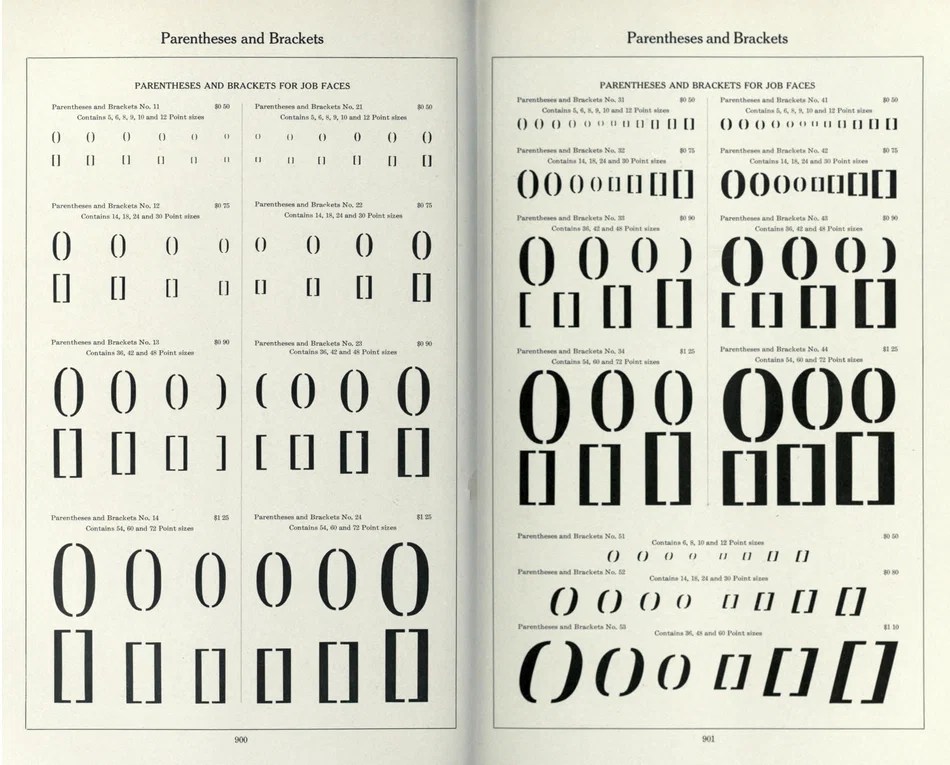
Florence Hazrat, with an adapted excerpt from her recent On the Mark- From Periods to Interrobangs, How Punctuation Remade the World…
On October 16, 1586, a young man writes a desperate letter to his friend: “My dear Weyer: Come. Come. My life is in danger and I long to see you.” Weak from the festering wound in his thigh, he scribbles those few lines in a shaky, hardly legible hand. Will the famous doctor be able to save him? When Weyer arrives the next day, the letter writer is already dead. Sir Philip Sidney [here], courtier, poet, and fervent Protestant soldier under Queen Elizabeth I, had been fighting Catholic Spain in the Netherlands when a bullet struck him, burying itself deep in the flesh of his thigh. The life of the superstar of Tudor high society was cut short, at the age of thirty-one, in a way mirrored by his own writing: Just before leaving for his holy war, Sidney interrupted the epic story about errant knights [The Countess of Pembroke’s Arcadia or simply Arcadia], which he had been working on for years, in the middle of an exciting battle. He left the action hanging on a parenthesis.
Anaxius lept away. Whereat ashamed (as having never done so much before in his life)
Readers, like the sentence and the plot, are on tenterhooks about what comes next. The work, of course, remains unfinished. Even so, Sidney was merely following a common composition practice of pausing mid-sentence or mid-matter, and using the parenthesis as a memory springboard when it was time to pick up the pen again. Yet considering how his own life was cut short at the height of his social and literary success, it’s hard not to entertain interpretations of the interrupted sentence as an eerie omen…
… When Coluccio Salutati invented the parenthesis, nearly 200 years before Sidney perfected it, he rendered visible an age-old rhetorical practice of inserting a particle of a sentence into a greater whole. The Roman rhetorician Quintilian called it interpositio, drawing attention to putting something in the middle of something else. But one suspects that there is a limit for how long the mini-digression can become without hijacking the main sentence (or story). There was no rule on the length of a parenthesis; it was up to the discretion of the writer to adjudicate appropriate delay. It makes sense, then, that Sidney’s near-contemporary, the schoolmaster John Hoskins, writes in his Directions for Speech and Style (1600) that “all parentheses are in extremities, either graces or disgraces to a speech”…
… Parentheses, turning the inside of a sentence out and the outside in, ask readers to shuttle back and forth, exercising mental agility that nurtures a flexible set of thoughts and feelings. Sidney’s brackets include qualifications of the thrust of the main sentence, comparisons, doubts, metaphors, and examples, all of which dilate the narrative into a complex, three-dimensional woven tapestry, accommodating innumerable opinions and interpretations. The parenthesis in word and deed is an ethical way of life: We pause for thought.
There’s something mysterious about the “little moons”, as Erasmus called them. The moon has represented, in various traditions, creation and destruction, rebirth, eternity, the feminine, time, marking time, mystery, the night, and secrets. And so has the parenthesis. The convex-concave curves of the open and closed parentheses cup something said by the way, whisperings, secrets mouthed into the reader’s ear, mumbled under the author’s breath. For Renaissance writers, punctuation belonged to the visual-grammatical and the spoken-rhetorical. Headmaster and pedagogical author Richard Mulcaster categorizes parentheses as “creatures to the pen and distinctions to pronounce by”. They’re amphibian in striking out a precarious existence as belonging to both the water of the spoken and the land of the seen. The (two) visual walls make meaning discrete, even as they remain permeable enough for the eye to slip in and out. You can’t overlook a bracket. Yet you can also read right through it. How does one read a bracket? How does one read it out? Mulcaster suggested that “the words enclosed by them are to be pronounced with a lower and quicker voice than the words either before or after them.” Both visually and aurally, then, what’s inside nestles safely between parenthetical palms, protecting tender expressions of intimacy.
Brackets establish a special magic between reader and writer. Perhaps that’s why Sidney used them to dedicate his work to his sister Mary, a gifted translator and accomplished poet in her own right:
Here now have you (most deare, and most worthy to be most dear Lady) this idle work of mine: which I fear (like the spider’s web) will be thought fitter to be swept away, than worn to any other purpose. For my part, in very truth (as the cruel fathers among the Greeks, were wont to do to the babes they would not foster) I could well find in my heart, to cast out in some desert of forgetfulnes this child, which I am loath to father.
Sidney is hedging his words in ever more delaying parentheses. He adds comparisons (“like the spider’s web” and “as the cruel fathers”), classical allusions to Greek myth, and appeals to the reader (“most dear Lady”). Parentheses encase words, keeping vulnerable admissions safe and visually private. An open bracket is always twinned with a closed bracket — the words inside are never left out in the cold…
The uncontested early modern king of brackets and the place of the parenthesis: “Philip Sidney and the Extreme (Dis)graces of the Parenthesis,” from @publicdomainrev.bsky.social.
###
As we interrogate interpositions, we might note that today is Ship in a Bottle Day.
Ship in a Bottle Day was first celebrated in 2013. October 4 was chosen in honor of Jack Hinkley, founder of the Ship in a Bottle Association of America, who helped promote and preserve this unusual maritime craft.
The tradition of building ships in bottles became especially popular in the 18th and 19th centuries. Sailors often made small models during long voyages, using their knowledge of ships, rigging, wood, thread, and simple tools.
The secret is not that the bottle is cut open. In traditional ship-in-a-bottle construction, the model is built so the masts and sails can fold down. The ship is carefully inserted through the neck of the bottle, and then the rigging is pulled to raise the masts into place. The process requires patience, steady hands, and careful planning. – source

“Merely fact-minded sciences make merely fact-minded people”*…

As we float awash in the debate over who/what is conscious (only humans? animals? plants? AI? everything?), we might take a moment to ponder the role of consciousness. For example, in science.
Harald A. Wiltsche argues that physicists, and scientists in general, attempt to paint an objective picture of reality. Consciousness, experience, and subjectivity are forcibly pushed out of the picture. Indeed, even where science is empirical, this empiricism rarely involves a consideration of human consciousness, but rather the readings of some mechanical measuring device, or some hypothetical abstracted sum of all perspectives – a God’s eye view or view from nowhere.
A phenomenologist of science, Wiltsche paints a different picture. Physics, even in the form of quantum mechanics, has its origins in the phenomenology of human consciousness. No matter how hard scientists try, it can never escape those origins, and to truly move forward, it must understand and embrace them…
Physics and phenomenology are usually taken to inhabit different worlds. Physics aims at a description of objective reality in mathematical terms. Phenomenology—the philosophical movement inaugurated by Edmund Husserl—is an a priori investigation into consciousness and into the ways things appear in experience. Physics deals with equations, invariants, and symmetries, aiming to represent reality minus observers; phenomenology seems to concern precisely what physics leaves out: subjectivity, consciousness, meaning. If the two meet at all, it is only in polite, but ultimately inconsequential, interdisciplinary dialogue.
My claim is that this picture is mistaken. Physics does not stand outside phenomenology. It presupposes the very structures phenomenology seeks to analyse—above all, the structured correlation between subject and object through which objectivity first becomes intelligible. The task, therefore, is not to unite two distant domains, but to recognize a relation that has been there from the beginning…
[Wiltsche makes his point first with reference to spacetime physics, then to quantum mechanics. He concludes…]
… The question, then, is no longer whether physics and phenomenology should be united. As physics confronts its own conceptual foundations, the challenge is to bring into view the structures phenomenology has analyzed since its inception—and to explore how they can illuminate the meaning of objectivity in modern theory.
Eminently worth reading in full.
Physics cannot escape its roots in phenomenology: “Consciousness is the hidden architecture behind fundamental and quantum physics” (or archived version here) from @haraldwiltsche.bsky.social in @iai.tv.
Bonus question: if Wiltsche is right that consciousness is essential to advancing our understanding of reality, and consciousness is something that other things, living and “inanimate,” (do or can) possess, what does that mean for our quest to understand realit(ies)?… Or does a question like this simply (albeit implicitly) affirm anthropocentrism? How will we know?
See also: “A physicist is just an atom’s way of looking at itself“
* Edmund Husserl
###
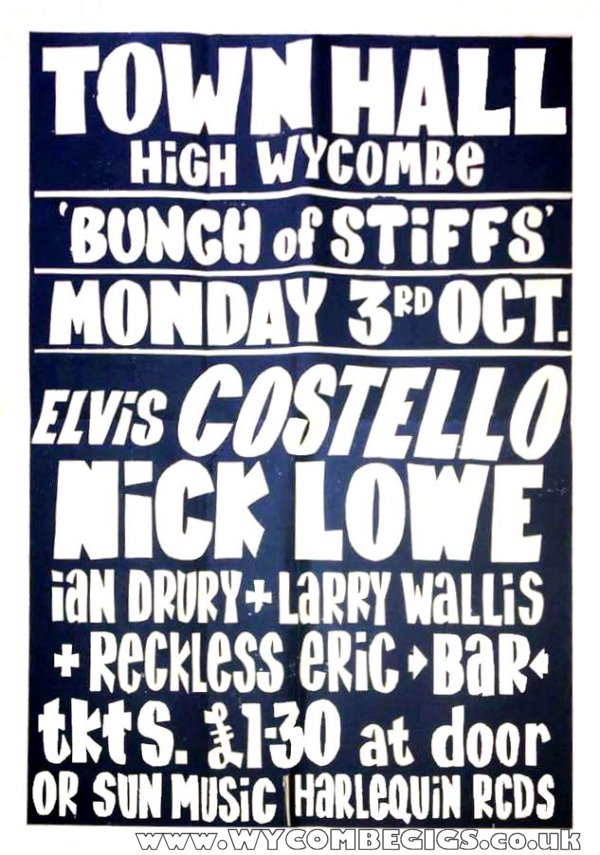
As we contemplate consciousness, we might note that it was on this date in 1977, at the High Wyncombe Town Hall in England, that the Bunch of Stiffs tour kicked off. It featured Nick Lowe’s Last Chicken in the Shop, Elvis Costello and The Attractions, Ian Dury and the Blockheads, Wreckless Eric and The New Rockets, and Larry Wallis’ Psychedelic Rowdies– acts managed by Dave Robinson and Jake Riviera before they formed the Stiff Records label, which released a live album of the festivities in February of 1978.
“A public trial is the best security for the pure, impartial, and efficient administration of justice, the best means of winning for it public confidence and respect”*

We have all, understandably, been paying a great deal of attention to what the U. S. Supreme Court has been deciding. But as Joe Patrice reminds us, it’s important to attend to how they are making their decisions as well…
Conservative justices have spent years at war with two words. I know you’re thinking it’s something like “equal protection” or “reproductive rights,” or “basic ethics,” but let’s be serious — they already won those wars. The two words that get the conservatives riled up these days are “shadow docket.” Samuel Alito blasted the media for using the term to create the impression that the Supreme Court “is deciding important issues in a novel, secretive, improper way in the middle of the night, hidden from public view,” just because the Supreme Court is, in fact, deciding important issues in a novel, secretive, improper way in the middle of the night, hidden from public view. Brett Kavanaugh even channeled his inner Gretchen Wieners seeking a “fetch”-esque rebrand, hoping the term “interim docket” might catch on to make the flurry of consequential constitutional decisions rammed through without briefing or written opinion seem less… shady.
Well, maybe they’re right! Maybe it is time to drop the shadow docket. Not because the Court’s aggressive abuse of the procedure is any more legitimate, but because the metaphor broke. A shadow needs something real to stand in the light, while the shadow is the smaller, murkier thing trailing behind.
But now, the shadow docket is the Supreme Court’s preferred way of doing business. The outlier is when the justices deign to respect transparency.
ProPublica set out to put numbers behind the shadow docket. Analyzing the Court’s records, and excluding simple administrative requests and capital cases that have long lived on the emergency docket, ProPublica found back in July that the shadow has overtaken the merits docket:
I discovered that in the term that ended in 2025, the justices issued more substantive decisions on their emergency docket than in cases argued in open court. Experts told me this was likely the first time this has happened in the court’s modern history.
The Supreme Court issued 63 shadow orders in the term ending last year, to only 56 with argument and real, written and signed majority opinions. This year isn’t looking much better.
When the kitchen door handles more traffic than the front door, it’s just the front door now. The briefing-argument-signed-opinion routine everyone learned in school — and which underpins the judiciary’s entire claim to legitimacy — is now the side project. We shall henceforth dub the merits docket as the “transparent docket,” a quaint exhibition the justices run from October through June in between unbriefed and unexplained rulings to rewrite constitutional order.
ProPublica’s Ken B. Morales put the numbers to the Supreme Court itself:
Representatives from the Supreme Court did not respond to my questions.
You have got to hand it to the justices for their commitment to the bit.
ProPublica notes that “Every decision the court has made since July has been on its shadow docket.” Which is always true during the Court’s summer break — but historically the summer break was a “break” and not business-as-usual. These days, the Court doesn’t take summers off from deciding things, just from explaining them.
Oh, remember back in the day when Amy Coney Barrett whined about the public needing to “read the opinion.” That was before she decided well, you can’t expect us to put ourselves on the record when we blow up constitutional order!
The surge in these under-the-table orders have mostly inured to the benefit of the Trump administration. Like the Court greenlighting the president’s power to blow up and then squander millions in taxpayer funds to build vanity projects — a power we hope to see applied to One First Street soon. But Trump has suffered his share of losses through the process too, notably this month’s block on Missouri’s new gerrymander and the order upholding the injunction on Trump using the Postal Service to steal mail-in ballots.
But as much as it warms the heart of anyone who cares about constitutional order to see the Trump administration lose, this is about more than the outcome. We should have arguments and signed opinions. The Court’s power derives from its power of persuasion, as Judge J. Michael Luttig has said. An emergency stay is all well and good if issued to give the justices time to set up a proper, transparent process.
But too often these days, as Professor Vladeck notes, the supposedly “interim” order slides into de facto permanence without the Court bothering to follow up…
Eminently worth reading in full: “Supreme Court ‘Shadow’ Docket Is Now Bigger Than The Real, ‘Transparent’ One,” from @joepatrice.bsky.social in @abovethelaw.com.
Update: After publication, I received this response from an old friend…
As a retired lawyer with time on my hands, I follow the Supreme Court fairly closely. To add some context to Joe Patrice’s article, lower federal courts have issued roughly 300 preliminary injunctions/temporary restraining orders against the Trump administration. The Supreme Court has considered 32 emergency appeals (the “shadow docket”) of those orders. It has stayed 24 of the PIs/TROs. The Court has explained most of those stays, particularly over the last year, and for the rest the reasons for the Court’s action are fairly obvious.
I have been reading Supreme Court opinions for 54 years now. The old opinions were more concise, elegant, and sweeping. They often ignored counterarguments and stayed out of the weeds. The current opinions & dissents are more thorough, rigorous, and legally sophisticated. They read more like law review articles. They address the other side’s arguments. They are more tedious to read, but do a better job of explaining decisions. The Court is more transparent today than it has ever been.
Your correspondent is not (like Joe Patrice and my old friend) a lawyer, retired or otherwise. I find that, while I take my friend’s points, I still prefer a return of the balance to the more open, on the merits docket… even as I appreciate that the Administration’s “flood the zone” approach is making this difficult… In nay case, even if we look past how the Court is operating, we’re left with what they are deciding…
* Robert Reid, 1st Earl Loreburn
###
As we agree with Louis Brandeis that “sunlight is the best of disinfectants,” we might recall that it was on this date in 1967 that Thurgood Marshall was sworn in as the first African-American justice of the United States Supreme Court. Appointed by President Lyndon Johnson, Marshall had been a storied civil rights attorney and jurist (Federal Court of Appeals); he served on the highest bench from 1967 until his retirement in 1991.
Our whole constitutional heritage rebels at the thought of giving government the power to control men’s minds.
— Thurgood Marshall

You must be logged in to post a comment.